Homepage // Blog / What It’s Really Like To Undergo Fraxel Re:pair
What It’s Really Like To Undergo Fraxel Re:pair
Quick Summary
Laser & Skin Surgery Center of New York explains what patients can realistically expect from Fraxel Re:pair, from the day of treatment through recovery and the development of results. This guide explores how the fractional CO2 laser works, the anesthesia options, downtime, common side effects, expected improvements, treatment frequency, and factors that may affect candidacy.
Fraxel Re:pair is not a light lunchtime laser treatment. It is a fractional carbon dioxide laser resurfacing procedure designed to address deeper skin concerns, including wrinkles, sun damage, uneven texture, scars, and early skin laxity.
Because it penetrates more deeply than gentler fractional treatments, patients should anticipate a genuine recovery period rather than expect to leave the appointment looking unchanged.
At Laser & Skin Surgery Center of New York, our physicians participated in the clinical trials that contributed to the development of Fraxel Re. The FDA cleared the Fraxel re laser system as a Class II laser surgical instrument. We customize treatment depth and intensity according to the skin concern, treatment area, and individual patient’s needs.
How Fraxel Re:pair Works
Fraxel Re:pair uses fractional CO2 laser energy to create microscopic treatment columns in the skin while leaving the surrounding tissue untreated. These controlled zones stimulate the skin’s natural healing response, including cell renewal and new collagen formation.
The untreated tissue between the microscopic columns helps the skin recover more efficiently. However, Fraxel Re:pair remains an intensive resurfacing procedure that generally requires more downtime than many nonablative laser treatments.
Our physicians may recommend it for deeper wrinkles, acne scars and other types of scarring, brown spots associated with sun exposure or aging, uneven skin tone and texture, and early skin laxity. The face is the most commonly treated area.
What The Appointment Feels Like
Before treatment begins, the skin is prepared, and anesthesia is administered to improve comfort during the procedure. Depending on the treatment plan, options may include topical anesthesia, local anesthesia, or IV sedation.
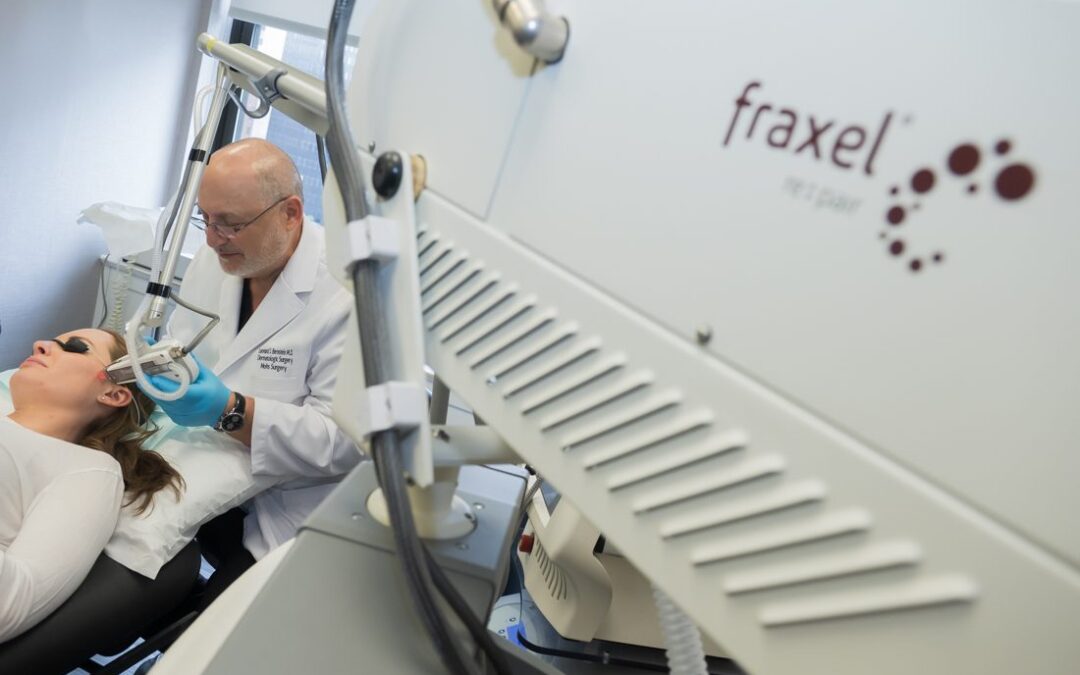
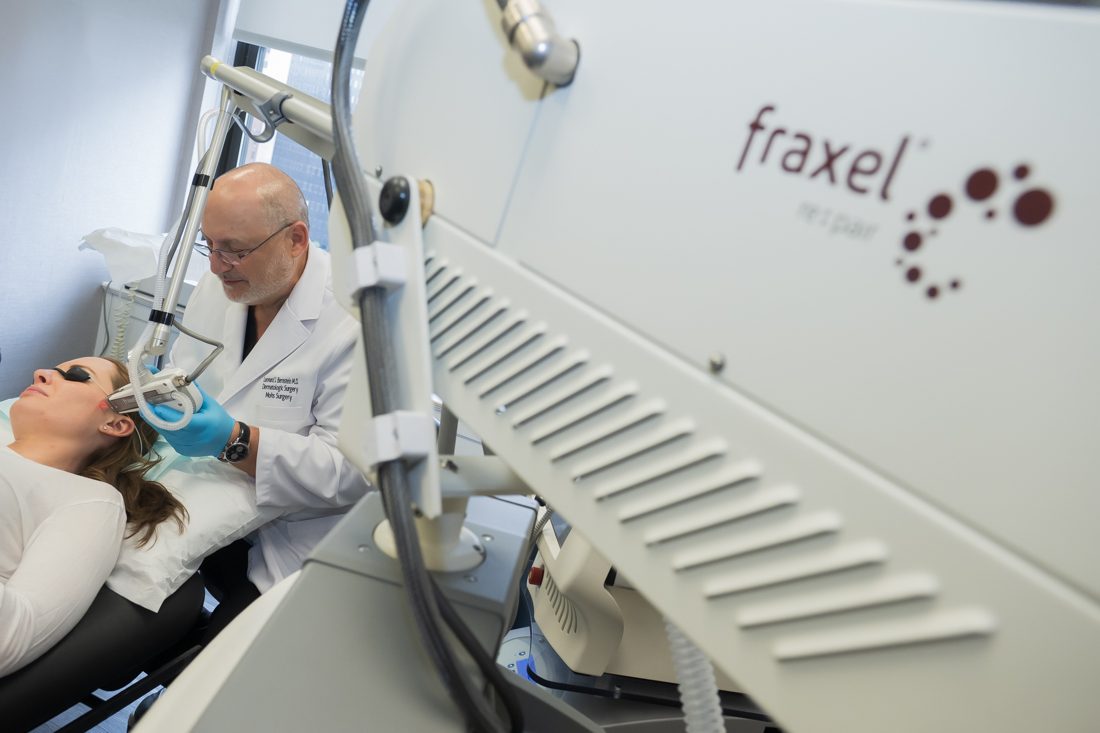
During the procedure, the handpiece delivers laser energy to selected areas of the skin. Patients may experience warmth, heat, pressure, or a prickling sensation. The level of discomfort varies according to the treatment intensity and the area being treated.
Appointment length also varies. Treating a small scar takes less time than performing full-face resurfacing. We review the treatment plan and anticipated recovery beforehand, so patients understand what to expect on the day of their procedure.
What Happens Right After Treatment
The first look in the mirror can be surprising for patients who have never undergone ablative fractional resurfacing. Redness and swelling are expected, and the skin may feel hot or resemble skin affected by a strong sunburn.
Over the following days, crusting, flaking, or peeling may develop as the treated skin heals. Our current Fraxel Re:pair guidance identifies redness, swelling, and crusting lasting approximately 7 to 10 days as common effects, although some symptoms may persist longer.
Timing is therefore an important consideration when planning treatment. Fraxel Re:pair generally involves more visible healing than milder laser procedures, so patients should account for the recovery period when scheduling work, social commitments, and other activities.
How Long Is The Downtime?
Healing typically takes about 3 to 14 days, with many patients returning to their regular activities after approximately one week. The precise timeline depends on the treatment intensity, the area treated, and each individual’s healing response.
During recovery, the skin may appear red, swollen, dry, or flaky. Some redness can persist even after the main peeling phase has ended.
Patients should follow their physician’s aftercare instructions throughout recovery. They should also avoid picking at or scrubbing peeling skin, as these actions can interfere with healing and increase the risk of complications.
When Will You See Results?
Initial improvements may become noticeable once the early healing phase subsides, often within one to two weeks. However, this represents only the beginning of the results.
Collagen remodeling takes time to produce visible changes. We explain to patients that improvements can continue developing for up to six months after treatment. Skin texture, firmness, wrinkles, and scars may improve progressively rather than changing all at once.
Results can be long-lasting, but the skin continues to age naturally. Consistent daily sun protection and an appropriate skin care routine can help maintain the improvements achieved through treatment.
How Many Treatments Are Usually Needed?
Many patients may achieve their desired results after one treatment, while others may benefit from additional sessions.
There is no universal treatment count that applies to everyone. Factors such as scar depth, wrinkle severity, sun damage, treatment intensity, individual skin response, and cosmetic goals all influence the recommended approach.
We evaluate the skin before treatment and monitor its response during recovery. Follow-up appointments also help us determine whether another session could produce meaningful additional improvement.
Who May Be A Good Candidate?
Fraxel Re:pair may be considered for people with deeper wrinkles, acne scars, other scars, sun-related pigmentation, rough texture, or early laxity who are comfortable with several days of visible recovery.
It is not the right laser for every person. Skin type, medical history, medications, healing history, previous procedures, and expectations all need to be reviewed first.
At our practice, medical and cosmetic treatments are performed by physicians, allowing treatment settings and aftercare to be based on an individual medical evaluation.
What Risks Should You Understand?
Redness, swelling, crusting, peeling, and temporary discomfort are common during recovery. Laser resurfacing can also carry risks such as prolonged redness, pigment changes, infection, scarring, or delayed healing.
A consultation is the right time to discuss personal risk factors and any steps needed before or after treatment. Patients should tell us about medications, previous skin reactions, cold sores, and recent cosmetic procedures.
Fraxel Re:pair is a fractional CO2 laser system cleared by the FDA for surgical laser applications. Its resurfacing handpiece delivers CO2 laser energy through a fractional treatment pattern rather than treating the entire surface uniformly.
Planning Fraxel Re:pair At Our Practice
Fraxel Re:pair can be a strong option for patients who want meaningful improvement in deeper wrinkles, scars, texture, pigmentation, and firmness and who are prepared for the recovery that comes with a more intensive laser procedure.
At Laser & Skin Surgery Center of New York, we match laser selection and treatment settings to the individual rather than assuming one device fits everyone. Schedule an appointment with us to discuss your skin concerns, expected downtime, and treatment options.
FAQs
Is Fraxel Re:pair Painful?
Anesthesia is used before treatment, and options can include topical, local, or IV sedation depending on the treatment plan. Patients may still feel warmth, heat, or pressure during the procedure. Comfort varies by treatment area and intensity.
How Long Does Fraxel Re:pair Recovery Take?
Healing usually takes about 3 to 14 days. Many patients return to regular activities in roughly one week, although redness or swelling may linger longer. Recovery varies based on treatment intensity and individual healing.
When Do Fraxel Re:pair Results Appear?
Early improvement can become visible within one to two weeks after the skin heals. Results may continue to develop for up to six months as collagen remodeling progresses.
Can One Fraxel Re:pair Treatment Be Enough?
Yes. Many patients may achieve substantial improvement from one session, while others may benefit from additional treatments. The number of sessions depends on the concern, treatment depth, skin response, and desired outcome.
Next, read about…
Why The MACS Facelift Is Not Your Traditional Facelift
Homepage // Blog / Why The MACS Facelift Is Not Your Traditional FaceliftQuick SummaryLaser & Skin Surgery Center of New York explains how a MACS facelift differs from a traditional facelift in its incision pattern, tissue repositioning, recovery, and ideal...
What Sets Belotero Balance Apart From Other Fillers?
Homepage // Blog / What Sets Belotero Balance Apart From Other Fillers?Quick SummaryLaser & Skin Surgery Center of New York explains how Belotero Balance differs from other hyaluronic acid fillers in its texture, integration with skin tissue, and ability to move...

Thinking About Restylane Kysse? Read This First
Homepage // Blog / Thinking About Restylane Kysse? Read This FirstQuick SummaryLaser & Skin Surgery Center of New York explains what patients should know before choosing Restylane Kysse for lip enhancement. This guide explores how the hyaluronic acid filler works,...