Homepage // Blog / Ruby Laser Treatment: What You Can Realistically Expect
Ruby Laser Treatment: What You Can Realistically Expect
Quick Summary
Laser & Skin Surgery Center of New York explains what patients can realistically expect from Ruby laser treatment for tattoos and selected pigmented lesions. This guide explores how the 694-nm laser works, which skin concerns it can address, expected improvements, the number of sessions needed, recovery, potential pigment changes, and why an accurate diagnosis is essential before treatment.
Laser treatments for pigmentation may sound straightforward: target a dark spot and make it disappear. In practice, successful treatment requires identifying the type of pigment, selecting a suitable wavelength, and adjusting the treatment settings to the patient’s skin and specific concerns.
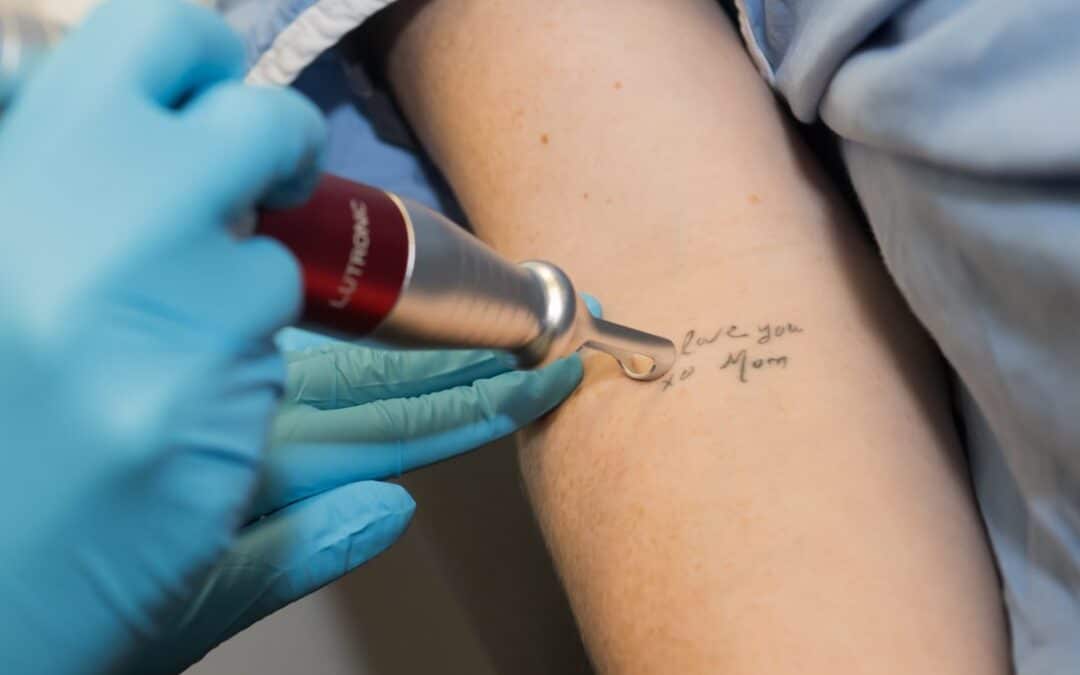
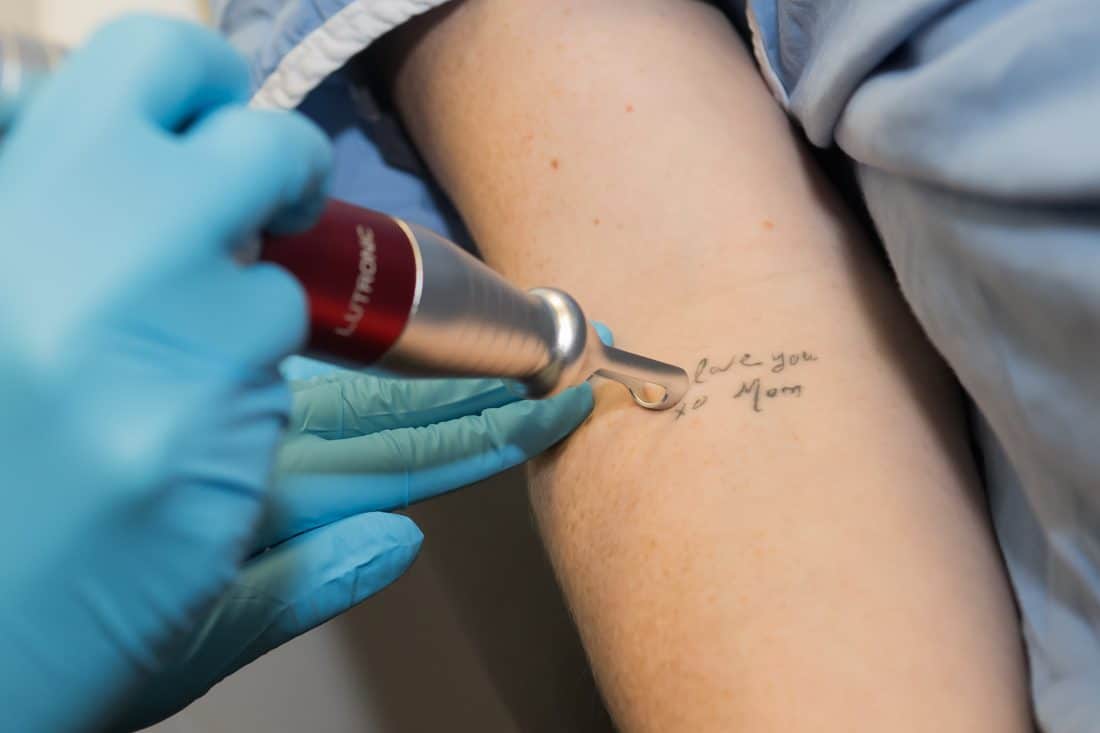
Ruby laser treatment uses a Q-switched 694-nm wavelength that is strongly absorbed by pigment. At Laser & Skin Surgery Center of New York, we use the Ruby laser for selected tattoos, brown spots, birthmarks, and other pigmented lesions when its wavelength and pulse characteristics fit the concern being treated.
How Does The Ruby Laser Work?
The Ruby laser delivers extremely short pulses of light into pigment within the skin. Melanin and tattoo ink absorb this light more readily than much of the surrounding tissue.
These rapid pulses disrupt the targeted pigment. Tattoo particles can break into much smaller fragments, which the body gradually clears over time. When treating benign pigmented lesions, the laser can disrupt melanin-containing cells, helping the visible discoloration fade as the skin heals.
This selective action is one reason Q-switched lasers have become important tools in dermatology. The objective is to target unwanted pigment while minimizing unnecessary damage to the surrounding skin.
What Can Ruby Laser Treatment Address?
At our practice, we use the Ruby laser for several pigmentation concerns. These include:
- Tattoos
- Lentigines and brown spots
- Café-au-lait macules
- Nevus of Ota
- Selected birthmarks and other benign pigmented lesions
The 694-nm wavelength has also been studied extensively for tattoo pigment. It can work particularly well for dark inks and some blue or green pigments.
Not every brown mark belongs on a laser treatment list. A pigmented lesion should be correctly diagnosed before treatment. If a spot has unusual features or there is concern about malignancy, medical evaluation comes before cosmetic laser treatment.
How Effective Is The Ruby Laser For Brown Spots?
For selected benign epidermal pigmentation, the Ruby laser can produce significant lightening.
However, some conditions may recur after treatment. Café-au-lait macules, for example, can become lighter initially and develop pigmentation again over time. For this reason, we do not describe every treated mark as permanently removed.
An accurate diagnosis is just as important as selecting the appropriate laser. Two brown spots that appear similar to a patient may respond very differently to the same treatment.
What About Tattoo Removal?
The Ruby laser has a long history in tattoo removal.
Its wavelength can effectively target certain tattoo colors while limiting injury to the surrounding skin. Research has demonstrated strong responses in blue-black and green tattoo pigments, although no single laser wavelength removes every ink color equally well.
Tattoo removal typically requires a series of sessions. Professional tattoos often contain multiple colors, pigment types, and ink depths, so treatment may require more than one laser platform to address the different components.
At Laser & Skin Surgery Center of New York, we have access to a broad range of laser technologies. This flexibility is particularly useful when a tattoo contains several colors that respond better to different wavelengths.
How Many Ruby Laser Sessions Will You Need?
There is no standard number of sessions that applies to every patient.
A small lentigo may respond much faster than a multicolored professional tattoo. The number of treatments depends on factors such as pigment depth, color, treatment area, lesion type, individual skin response, and previous procedures.
Our Ruby laser information notes that some pigmentation concerns may respond after a single session, while tattoos commonly require multiple treatments.
Sessions are spaced apart to give the skin time to recover and allow the body to clear the disrupted pigment. Compressing the treatment schedule does not necessarily accelerate pigment removal and may interfere with the recovery process.
What Does Ruby Laser Treatment Feel Like?
Most patients describe the procedure as brief and manageable. Each laser pulse may produce a quick snapping sensation, heat, or stinging as the energy reaches the skin.
Topical or local anesthesia may be used before treatment, depending on the area and the condition being addressed.
Treatment duration varies according to the size of the area. Treating a few individual brown spots may require only a short appointment, whereas a large tattoo generally takes longer.
What Is Recovery Like?
Downtime is usually limited, although the treated area may not look normal immediately after the procedure.
Redness and swelling commonly last a day or two. Bruising or temporary darkening may persist longer, particularly following treatment of certain birthmarks.
Depending on the treatment, temporary crusting or other surface changes may also develop as the skin heals and the pigment clears.
Avoid picking at the treated skin during recovery. We provide aftercare instructions tailored to the treatment area and laser settings used. Sun protection is also important because ultraviolet exposure can contribute to unwanted pigment changes after treatment.
How Long Do Results Last?
Results can be long-lasting when a discrete tattoo or benign pigmented spot clears successfully. However, treatment does not stop new pigmentation from developing.
Sun exposure, aging, and the natural behavior of the underlying condition can lead to new spots or recurrence. Some lesions, including café-au-lait macules, may repigment after initial improvement.
Good sun habits can help reduce new sun-related pigmentation, but no laser can permanently stop the skin from changing.
What Makes A Good Ruby Laser Candidate?
A good candidate has a clearly diagnosed concern that responds well to the 694-nm wavelength and realistic expectations about treatment.
We look at skin tone, pigment type, depth, location, medical history, previous treatment, and the result the patient wants. Sometimes Ruby is the right device. In other cases, another laser may be a better match.
At Laser & Skin Surgery Center of New York, we have an extensive collection of laser technologies, and all medical and cosmetic treatments are performed by physicians. That allows us to choose treatment around the skin condition rather than forcing every concern into one device.
If you are considering Ruby laser treatment for a tattoo or pigmented lesion, schedule an appointment with us to discuss what type of pigment you have and what level of improvement may be realistic.
FAQs
How Soon Will I See Results After Ruby Laser Treatment?
Improvement becomes easier to judge once the treated skin heals. Some brown spots may fade after one session, while tattoos and deeper pigmentation usually change gradually over several treatments.
Is Ruby Laser Treatment Permanent?
The treated pigment can remain significantly reduced or cleared, but results are not universally permanent. Some birthmarks and pigmented lesions can return, and new sun-related spots may develop later.
Can The Ruby Laser Remove Every Tattoo Color?
No. Different ink colors absorb different laser wavelengths. Ruby can work well for certain dark, blue, and green pigments, but other wavelengths may be more effective for other colors. Multicolored tattoos may require several laser technologies.
Next, read about…
Why The MACS Facelift Is Not Your Traditional Facelift
Homepage // Blog / Why The MACS Facelift Is Not Your Traditional FaceliftQuick SummaryLaser & Skin Surgery Center of New York explains how a MACS facelift differs from a traditional facelift in its incision pattern, tissue repositioning, recovery, and ideal...
What Sets Belotero Balance Apart From Other Fillers?
Homepage // Blog / What Sets Belotero Balance Apart From Other Fillers?Quick SummaryLaser & Skin Surgery Center of New York explains how Belotero Balance differs from other hyaluronic acid fillers in its texture, integration with skin tissue, and ability to move...
What It’s Really Like To Undergo Fraxel Re:pair
Homepage // Blog / What It’s Really Like To Undergo Fraxel Re:pairQuick SummaryLaser & Skin Surgery Center of New York explains what patients can realistically expect from Fraxel Re:pair, from the day of treatment through recovery and the development of results....