
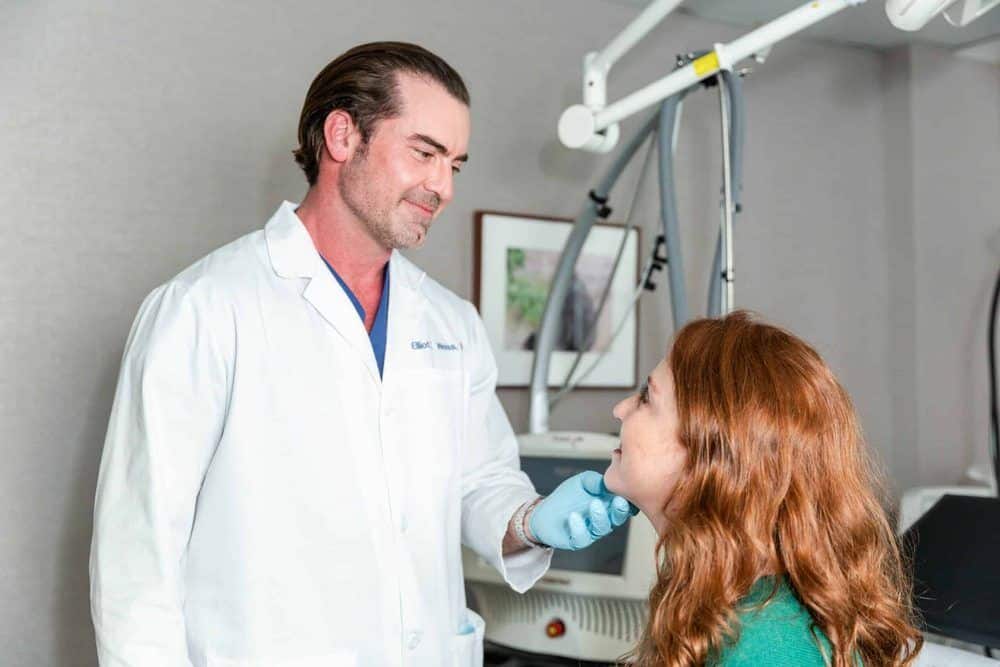
Homepage // Blog / Botox Vs. Dysport: Which Lasts Longer?
Botox Vs. Dysport: Which Lasts Longer?
Quick Summary
Botox™ and Dysport™ are injectable neuromodulators used to reduce the appearance of dynamic facial wrinkles by temporarily relaxing targeted muscles. Both treatments work in a similar way, but their onset, diffusion patterns, and duration of results can vary slightly between patients. When evaluating whether botox™ or dysport™ last longer, factors such as metabolism, treatment area, dosage, and muscle activity play a significant role. In most cases, results last several months for both options, with subtle differences in how individuals respond to each formulation.
Patients often compare Botox™ and Dysport™ when exploring wrinkle-relaxing treatments, especially when trying to understand whether Botox™ or Dysport™ last longer in real-world results. While both injectables are derived from botulinum toxin type A and work through similar mechanisms, small differences in formulation can influence how quickly results appear and how long they remain effective. Other botulinum toxin options, such as Daxxify™ and Jeuveau™, are also available and may suit certain patients depending on their goals and treatment preferences.
These treatments are commonly used to address expression lines such as frown lines, forehead creases, and crow’s feet. They temporarily reduce muscle activity beneath the skin, allowing wrinkles caused by repeated facial movement to soften over time. Although the end goal is similar, patient experience can vary based on how each product interacts with facial anatomy and muscle strength.
Understanding the differences between Botox™ and Dysport™ is important for setting realistic expectations. Duration is not determined by the product alone but by a combination of biological and treatment-related factors that influence how the body responds over time.
How Botox™ Works
Botox™ is a neuromodulator derived from botulinum toxin that temporarily blocks nerve signals to specific facial muscles responsible for dynamic wrinkles. By reducing muscle contractions, it allows the overlying skin to appear smoother and more relaxed. This effect develops gradually over several days following injection.
The treatment is commonly used for areas such as the forehead, glabella, and around the eyes. Results typically appear within a few days and continue to refine as muscle activity decreases. The duration of effect generally lasts for several months, depending on individual response and treatment patterns.
Most patients begin to notice visible softening of lines within 3 to 5 days, with full results becoming more apparent around 10 to 14 days. As muscle activity reduces, repeated facial folding that contributes to wrinkles is significantly minimized which allows the skin to maintain a smoother appearance during everyday expressions. Maintenance treatments are often scheduled every few months to sustain consistent outcomes.
How Dysport™ Works
Dysport™ functions in a similar way by targeting nerve signals that trigger muscle contractions. Once injected, it spreads slightly differently within the tissue, which may influence how it performs in certain facial areas. This property can make it useful for treating broader regions such as the forehead.
Results from Dysport™ also develop over a short period following treatment, with visible improvement in dynamic wrinkles as muscle activity reduces. Like Botox™, its effects are temporary and gradually diminish as nerve signaling resumes over time.
Most patients begin noticing early softening within 2 to 3 days, with full results typically visible within 7 to 14 days. The diffusion pattern may contribute to a more even appearance in larger treatment areas when appropriately dosed. Duration generally lasts several months, although individual metabolism and muscle activity can influence how long results remain visible. Regular maintenance treatments are often recommended to sustain consistent improvement.
Botox™ or Dysport™: Key Differences in Duration
When comparing Botox™ and Dysport™, the difference is not absolute, as both treatments typically last around three to four months for most patients. However, individual response can vary based on metabolism, dosage, injection technique, and treatment area.
Some patients report that Dysport™ appears to last slightly longer in certain areas due to its diffusion pattern, while others find Botox™ provides more consistent longevity. These differences are subtle and often depend on how the body metabolizes the product rather than the formulation itself.
Onset of Results and Spread
One noticeable difference between Botox™ and Dysport™ is the onset of visible results. Dysport™ may begin working slightly faster in some patients, with early improvement appearing within two to three days. Botox™ may take a bit longer, often becoming noticeable within three to five days.
Dysport™ also tends to spread more within the treatment area, which can be beneficial for larger zones but may require precise dosing to avoid unintended effects. Botox™ has a more localized effect, which some practitioners prefer for targeted treatment areas requiring high precision.
Factors that Influence How Long Results Last
The duration of results from either Botox™ or Dysport™ is influenced by multiple biological and lifestyle factors. Muscle strength plays a key role, as stronger or more active muscles may metabolize the product more quickly.
Metabolic rate, frequency of facial movement, and previous exposure to neuromodulators can also affect how long results last. Patients who receive regular treatments may notice longer-lasting effects over time as muscles become trained to relax more easily.
Several factors can influence how long Botox™ or Dysport™ results remain visible, including:
- Muscle activity: Higher facial muscle movement leads to faster breakdown of neuromodulator effects, which can shorten the visible duration of results. Areas with frequent expression changes often metabolize botox or dysport more quickly.
- Metabolism rate: Individuals with faster metabolic activity may process the product sooner, resulting in a shorter duration of effect compared to those with slower metabolic rates.
- Treatment area: Certain facial regions, such as the forehead or around the eyes, may respond differently based on muscle strength and skin dynamics, influencing how long results remain visible.
- Dosage and technique: The amount injected and precision of placement play a significant role in how evenly the product distributes and how long the results are maintained.
- Previous treatments: Patients who have received regular neuromodulator treatments may experience longer-lasting effects over time as muscles become more conditioned to relaxation.
Areas Commonly Treated With Botox™ and Dysport™
Both Botox™ and dysport™ are used to treat similar facial areas, including forehead lines, frown lines between the eyebrows, and crow’s feet around the eyes. These regions are prone to dynamic wrinkles caused by repeated facial expressions.
Treatment selection may depend on muscle strength, desired spread, and physician preference. In some cases, one product may be recommended over the other to achieve more balanced or natural-looking results in specific facial zones.
Safety and Treatment Experience
Both Botox™ and Dysport™ have established safety profiles when administered by trained medical professionals. Side effects are typically mild and may include temporary redness, swelling, or bruising at the injection sites.
The treatment process is relatively quick, often completed within a short office visit with minimal downtime. Patients can usually resume normal activities shortly after treatment, although specific aftercare instructions are provided to optimize results.
Choosing Between Botox™ and Dysport™
Choosing between Botox™ and Dysport™ depends on individual treatment goals, facial anatomy, and how each product performs for a specific patient. Daxxify™ and Jeuveau™ are additional botulinum toxin options that may also be considered during a consultation, offering alternative formulations that suit different patient needs and desired outcomes. Some individuals respond better to one formulation than the other in terms of onset, duration, and aesthetic outcome.
A consultation allows a provider to evaluate muscle activity and recommend the most appropriate option based on experience and expected results. Both treatments remain highly effective for reducing the appearance of dynamic wrinkles.
Finding the Right Treatment Plan
Botox™ and Dysport™ produce similar results for most patients, with duration often influenced more by individual factors than by the product itself. Understanding how treatment area, muscle activity, and personal response affect outcomes can help patients make more informed treatment decisions.
At Laser & Skin Surgery Center of New York, we evaluate facial anatomy, muscle movement, and aesthetic goals to determine the most appropriate neuromodulator treatment for each patient.
Contact us to learn more about wrinkle-relaxing treatments and explore whether Botox™ or Dysport™ may be the right option for your needs.
FAQs
How long do Botox™ and Dysport™ results usually last?
Both treatments typically last around three to four months, although individual results may vary based on metabolism and muscle activity.
Does Dysport™ work faster than Botox™?
Dysport™ may show initial results slightly sooner in some patients, but overall effectiveness develops over a similar timeframe.
Can one treatment last longer than the other?
Duration differences are generally minimal and depend more on individual response than on the product itself.
Which is better for long-term wrinkle prevention?
Both Botox™ and Dysport™ are effective for reducing muscle activity and preventing the formation of deeper expression lines over time.
Next, read about…
Face Lift And Fat Transfer: Where Lifting + Volume Is The Best Combination
Homepage // Blog / Best treatments for all types of scars explainedQuick SummaryA face lift and fat transfer combines two powerful techniques into one harmonious rejuvenation. The surgical lift tightens sagging muscles and removes extra skin, while your own purified...
How Much Botox Is Too Much? A Safety Guide
Homepage // Blog / Best treatments for all types of scars explainedQuick SummaryToo much Botox creates a stiff, unnatural look, limiting your ability to show normal expressions. The safe limit depends on your anatomy and the treatment area, but excessive doses can...
9 Common Causes Of Sagging Breasts And Best Treatments To Try
Homepage // Blog / Best treatments for all types of scars explained Quick Summary Breast asymmetry after augmentation can occur for several reasons, including normal healing, swelling, implant settling, or pre-existing differences between the breasts. In many cases,...